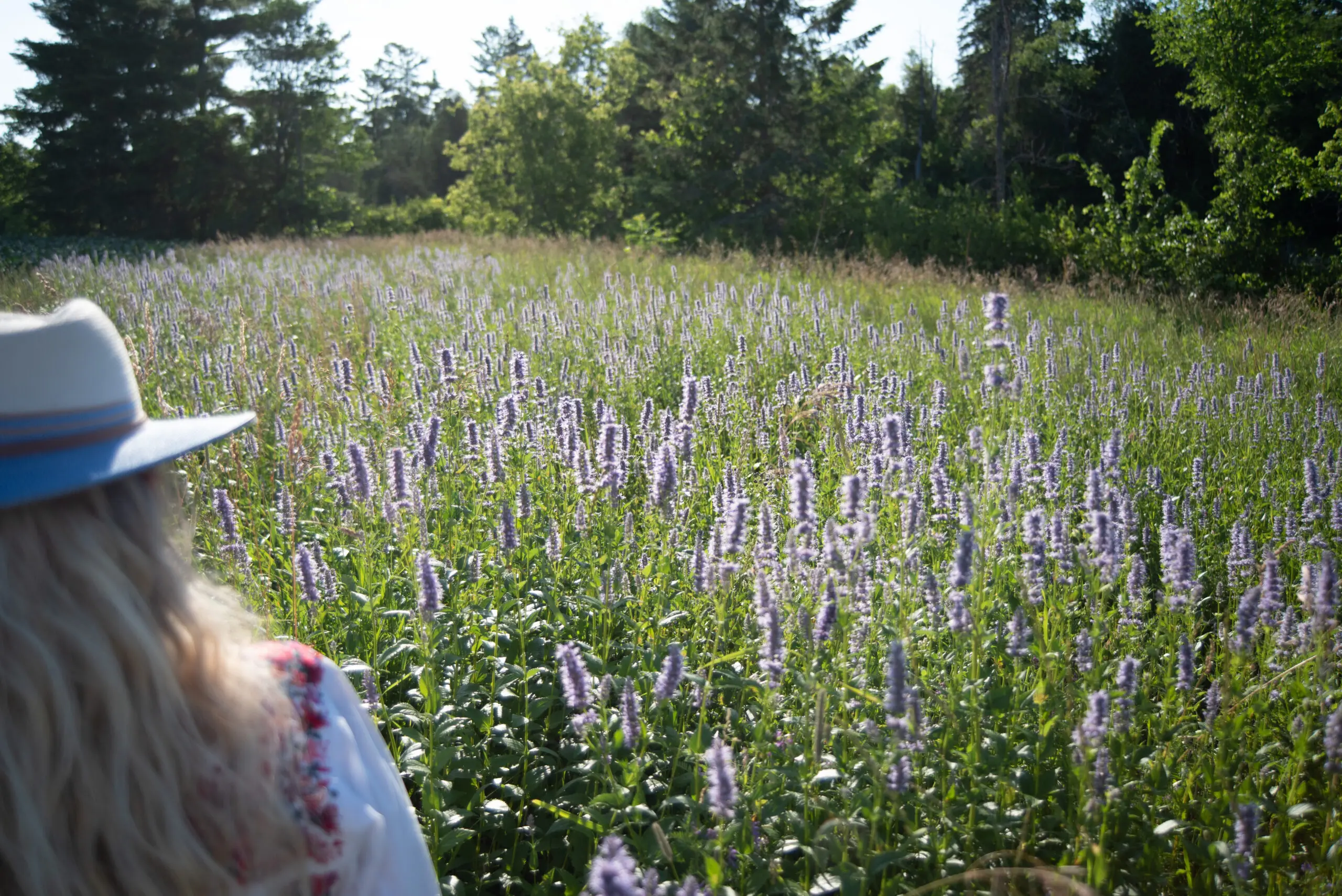
Anise Hyssop: A Bee’s Bestie!
Some plants ask a lot of a gardener. Anise hyssop asks almost nothing. Give it…
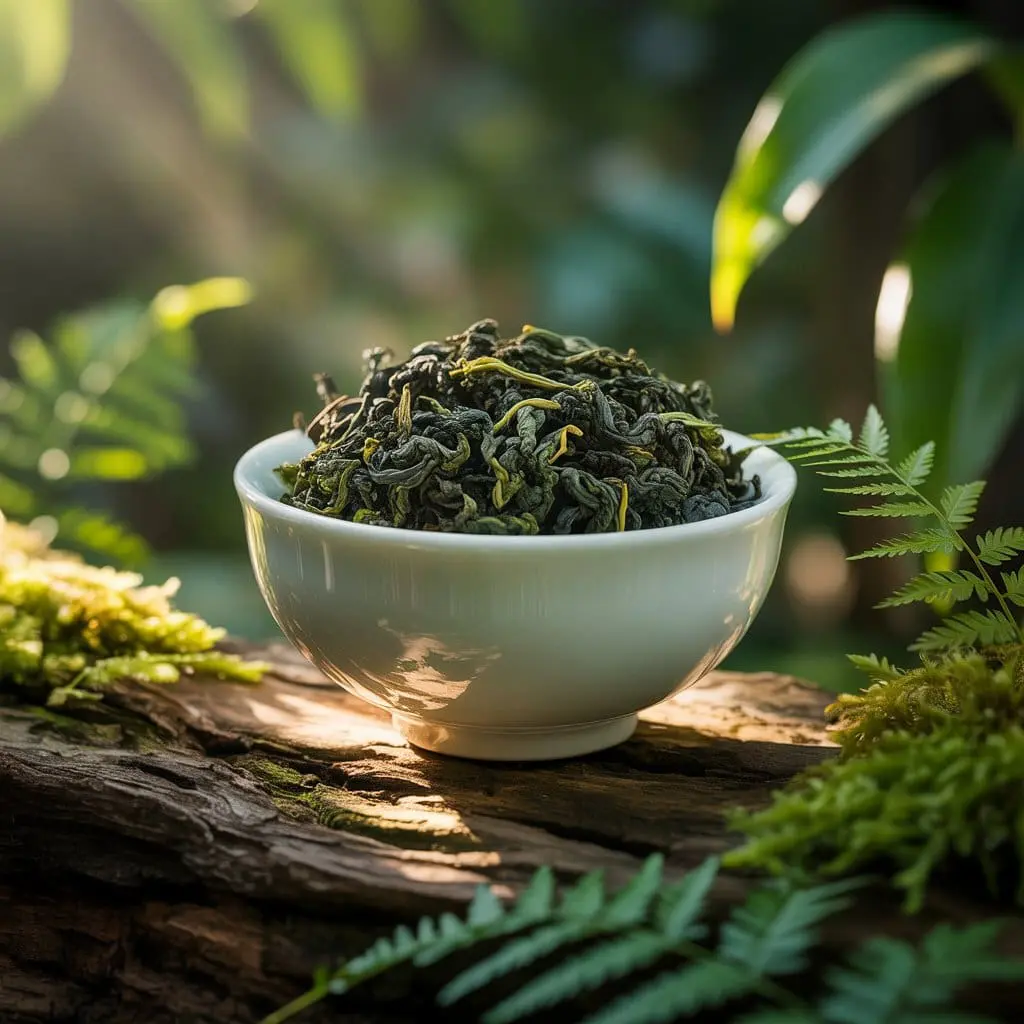
There is a mountain in Fujian Province, China, where monks have been climbing before dawn for over a thousand years. They climb to tend their tea. They climb to pray. They climb because somewhere along the way, the act of harvesting and steeping these leaves became indistinguishable from the act of devotion itself. That tea is Ti Kuan Yin oolong, the Iron Goddess of Mercy, and it is at the heart of our High Meadow blend.
I want to tell you about this tea properly. Because it deserves more than a quick description on a package. It carries a lineage.
All true tea (black, green, white, and oolong) comes from the same plant: Camellia sinensis plant. What separates them is not the leaf itself but what happens to it after harvest. It is about transformation through oxidation.
Think of a freshly cut apple turning brown in the open air. That is oxidation at work. Tea makers harness that same natural process with great skill and intention.
Oolong is where the real complexity lives. Depending on how long the leaves are allowed to rest and turn, oolong can taste like a whisper of fresh flowers or a warm ember of roasted honey. Ti Kuan Yin, our Iron Goddess, falls on the lighter, more floral end of that spectrum. Silky, aromatic, and graced with what tea scholars call an “orchid finish.” A lingering sweetness that arrives after you swallow, like a kindness you didn’t expect.
The story behind Ti Kuan Yin is not just agricultural history. It is a story about devotion, gratitude, and the relationship between human beings and the more-than-human world.
Kuan Yin (Guanyin in Mandarin) is the Bodhisattva of compassion, revered across East Asia as the embodiment of mercy and loving kindness. In the Fujian mountains of China, roughly 1,200 years ago, a poor farmer named Wei discovered a neglected iron shrine to Kuan Yin in the hills above his village. Despite his poverty, he cleaned the shrine and brought offerings of incense. He returned again and again, tending the forgotten place with nothing asked in return.
One night, the Goddess appeared to him in a dream and told him of a treasure hidden in a cave behind her shrine. He went to look. Inside, he found a single tea shoot.
He planted it. He tended it. The tea that grew became Ti Kuan Yin, the Iron Goddess of Mercy. And the monks of those mountains understood immediately that this was not an ordinary plant. For centuries, Zen Buddhist monks high in the Fujian hills used this tea to support their long hours of meditation and prayer. The gentle caffeine kept them awake. The calming L-theanine eased their minds. The ritual of preparation brought them into presence.
Many Indigenous traditions of Turtle Island would recognise this understanding immediately. When you approach a plant with reverence, when you tend the place where it grows, when you come in right relationship before you harvest, the plant gives you something more than its chemistry. It gives you its medicine. This is not metaphor. It is the oldest knowledge we have.
Oolong tea has been the subject of growing scientific research. While it is not a medicine, regular consumption is associated with several supportive health effects.
Metabolism and weight management:
Oolong tea contains polyphenols that may help increase energy expenditure and fat oxidation in the short term. Some controlled trials suggest modest effects on metabolism, though results are mixed and should not be overstated as a weight-loss solution.
Heart health:
Tea consumption, including oolong, has been associated with improved cardiovascular markers. Observational studies suggest regular intake may support healthy cholesterol levels and reduce cardiovascular risk, likely due to antioxidant compounds such as catechins and theaflavins.
Calm, alert focus:
Oolong contains both caffeine and L-theanine. This L-theanine and caffeine combination has been shown to support a state of relaxed alertness, improving attention while reducing the jitteriness sometimes associated with caffeine alone.
Blood sugar balance:
Some studies indicate oolong tea may help improve glucose metabolism and insulin sensitivity, particularly when consumed regularly. However, it should be seen as a supportive dietary habit rather than a treatment.
Skin and bone health:
Tea polyphenols may contribute to skin health through antioxidant activity. Long-term tea consumption has also been associated with higher bone mineral density in some population studies, possibly linked to compounds such as flavonoids and minerals like manganese.
A note on caffeine:
Ti Kuan Yin oolong contains moderate caffeine, roughly 30 to 50mg per cup depending on steeping time. This is less than black tea and significantly less than coffee, but still physiologically active. If you are sensitive to caffeine, please enjoy High Meadow in the morning or early afternoon. Evening steeping is not recommended for those who find caffeine affects their sleep.
When we created High Meadow, we wanted to honour two very different lineages of plant knowledge: the ancient mountain wisdom of Fujian and the boreal wildcraft wisdom of this land.
Sweetfern (Comptonia peregrina) is not actually a fern at all. It is a small, fragrant shrub that grows in sandy, sun-warmed clearings across the Algonquin region. The Anishinaabe have long known this plant. It grows in the places where the land is healing, in the openings and edges, the meadows between forest and sky. It smells of resin and summer and something older than memory. We harvest it by hand, reading the plant and the place carefully before we take anything.
Together, Ti Kuan Yin and sweetfern create something that neither could be alone. The orchid notes of the oolong are lifted by the aromatic depth of the sweetfern. The result is meditative and grounding, complex and quietly joyful. It is a tea for pausing. For remembering where you are.
The monks of Fujian steeped their Ti Kuan Yin in water just below boiling, about 85-90°C (185-195°F). Boiling water can scorch the leaves and lose the orchid finish. Give it a moment to settle.
Ti Kuan Yin rewards a second and third steeping. Each brew opens the leaf a little more.
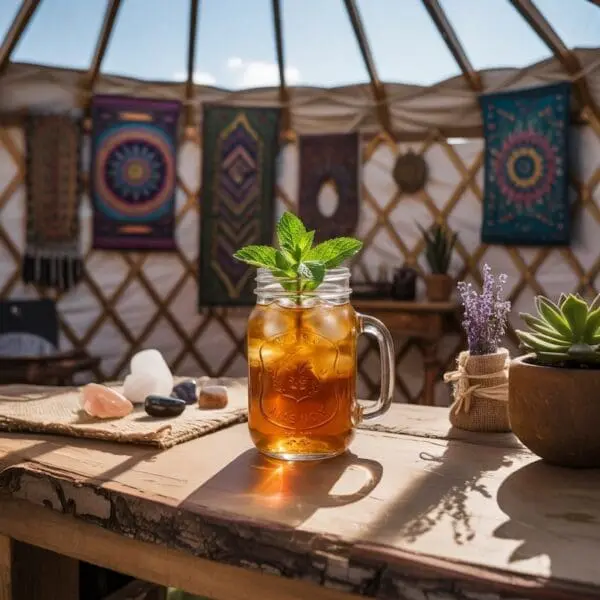
Cold brewing is the gentlest way to draw out tea’s sweetness. No bitterness. No heat. Just slow time and cold water, the way a forest stream draws minerals from stone.
Cold brewed High Meadow has a clarity to it. The sweetfern comes through like a memory of a warm afternoon.
When the day turns cooler or rainy, this is the cup.
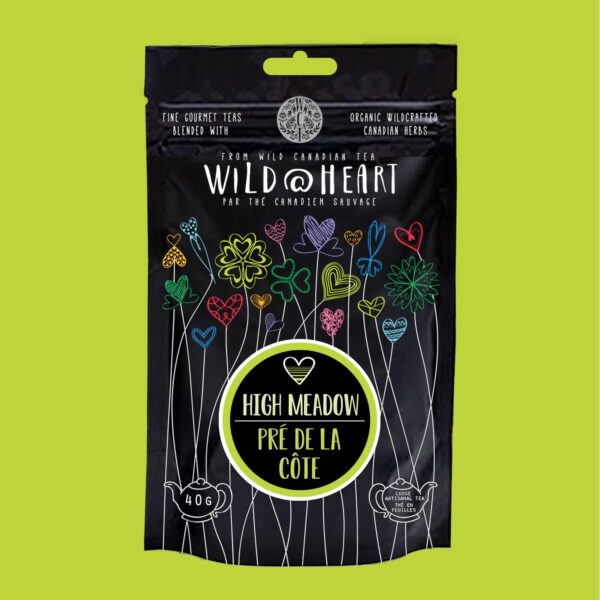
High Meadow is part of our Wild @ Heart collection, where premium teas from distant traditions meet the wild, hand-harvested plants of the Algonquin region. Available in 16 tea bags or loose leaf.
Frequently Asked Questions About Oolong Tea:
Oolong is a partially oxidised tea made from Camellia sinensis leaves, sitting between green tea and black tea on the oxidation spectrum. It is celebrated for its complex, layered flavour and its calming, focused energy.
Oolong is rich in antioxidants and has been linked to heart health, healthy metabolism, blood sugar balance, and focused mental clarity. The combination of caffeine and L-theanine creates a calm, present alertness.
Morning or early afternoon is ideal. The moderate caffeine in oolong tea makes it a wonderful coffee alternative in the morning or a mid-afternoon companion. Avoid drinking it too late in the evening if you are sensitive to caffeine, as it may affect sleep.
Yes. Ti Kuan Yin oolong contains roughly 30-50mg of caffeine per cup, moderate compared to black tea and significantly lower than coffee. The L-theanine in oolong balances the caffeine, making the energy feel smooth and unhurried rather than sharp.
This depends on the style. Ti Kuan Yin, the Iron Goddess of Mercy, is a lightly oxidised oolong with a soft, floral character and a famously gentle orchid-like finish. High Meadow adds Canadian sweetfern for aromatic depth and warmth.
Yes, and you should. Ti Kuan Yin in particular rewards multiple steepings. Each infusion opens the leaf a little further, revealing new dimensions of flavour. Many tea lovers find the second or third cup the most interesting.
Our wild-harvested sweetfern grows in the pristine forests of the Algonquin region without any use of pesticides or chemicals. Wildcrafted plants are nature’s own organic. The Ti Kuan Yin is sourced as premium quality oolong. Please contact us at spirit@algonquintea.com for current sourcing details.