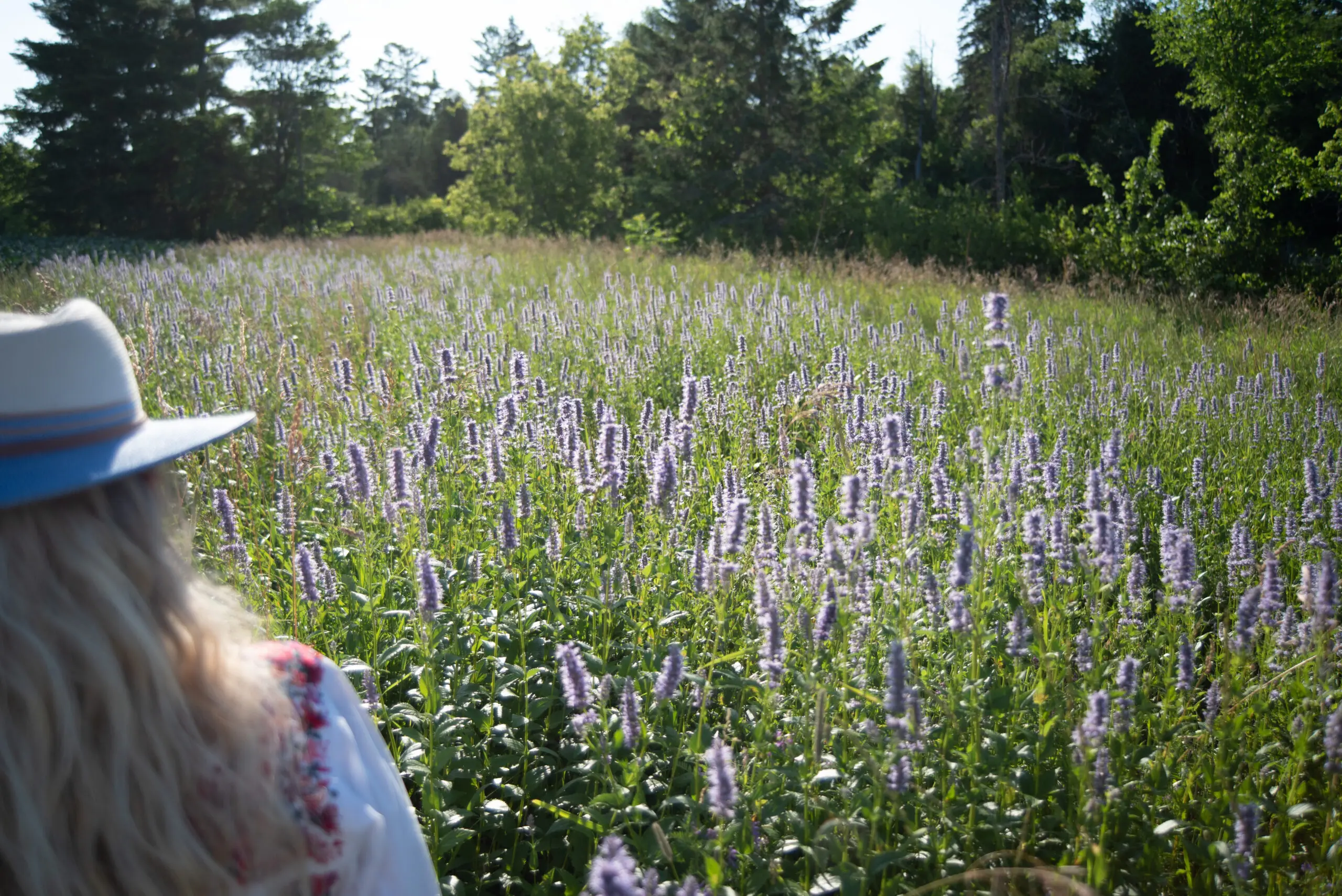
Anise Hyssop: A Bee’s Bestie!
Some plants ask a lot of a gardener. Anise hyssop asks almost nothing. Give it…
Iced teas are one of the most popular summertime beverages in North America. They are also, depending on what you are reaching for at the grocery store, some of the most sugar-loaded drinks on the shelf (often surpassing sodas in refined sugar content). A 20-ounce bottle of a major commercial iced tea brand can carry as much as 60 grams of added sugar, equivalent to roughly 15 teaspoons.¹ Many commercial iced teas also contain artificial colours, synthetic flavourings, and preservatives that have no business being in your glass. The good news is that iced tea does not have to be any of those things. Made at home with real tea and real ingredients, sweetened with a drizzle of honey or a pour of maple syrup, it becomes something worth looking forward to. Refreshing, affordable, and genuinely good for you. In this article, we will walk you through the best methods, such as cold brew tea, recipes, and tips for making delicious iced tea for you and your family all summer long.
Most people make iced tea by brewing it hot, then pouring it over ice. It works. But cold brew is something different entirely.
Cold brew tea is exactly what it sounds like. You steep tea leaves or herbs in cold or room-temperature water and let time do the work. No heat involved. The process is slow, typically six to twelve hours, but the result is noticeably different from hot-brewed tea that has been chilled.
Hot water extracts compounds from tea quickly, including tannins, the astringent polyphenols that give black tea its bite. That can be pleasant in a hot cup, but when you cool it down and add ice, that bitterness can become sharp and a little harsh. Cold water is gentler. It pulls out the sweetness and the floral, fruity, and herbal top notes of a tea without over-extracting the tannins. The result is a smoother, naturally sweeter drink that needs far less sweetener to taste balanced.
There is also a practical reason cold brew has caught on: it is almost entirely hands-off. Set it up before you go to bed. Pour it in the morning. That is the whole process.
Here is a quick comparison so you know what you are working with.
Hot brew uses water between 80°C and 100°C, depending on the tea type. Steep time is usually two to five minutes. The heat extracts compounds fast, including tannins, caffeine, and volatile aromatics. If you overbrew, it becomes bitter. The drink needs to cool before serving over ice, and rapid cooling can cause the tannins to crystallize, which is what makes iced tea go cloudy.
Cold brew uses cold or room-temperature water. Steep time is six to twelve hours, usually overnight in the fridge. The slow extraction is selective. It pulls sweetness and softer aromatics forward and leaves much of the bitterness behind. Tannins are far less soluble in cold water, which is why cold-brewed tea tastes so much smoother than its hot-brewed equivalent.² Cold-brewed tea is also lower in caffeine. Typically, around half that of a hot brew when using the same amount of leaf, making it a gentler option for anyone who is sensitive or wants something they can drink into the afternoon.³
If you have a tea you love hot but find a little sharp as iced tea, try cold brewing it. The difference can be remarkable.

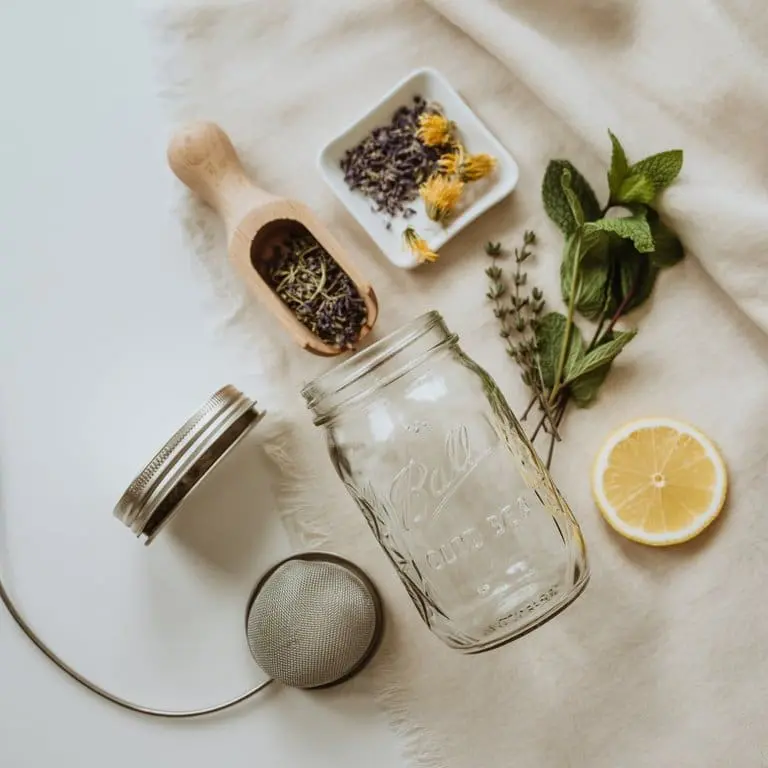
You do not need any special equipment. A mason jar, a fine mesh strainer, and your chosen tea is all it takes.
Basic Cold Brew Method
Cold brew tea keeps well in the fridge for up to three days.
A note on sweetening. Because cold brew is naturally less bitter, you may find you need far less sweetener than you are used to. Start with a small amount, taste, and adjust. Pure honey is a wonderful choice, and raw honey even more so as it retains its natural enzymes, antioxidants, and antimicrobial properties that processed honey loses. The one thing to know is that raw honey does not dissolve well in cold water. The easiest fix is to stir your honey into a small amount of just-boiled water first, let it dissolve fully, then cool before adding it to your cold brew. Maple syrup adds a gentle, distinctly Canadian depth that plays particularly well with herbal and floral blends and dissolves easily at any temperature.
Almost any tea cold brews beautifully, but some shine especially bright.
Black tea produces a full-bodied, satisfying cold brew with a rich colour. The tannins are still present but softened, and the natural malt notes come forward in a way that hot brewing can sometimes obscure. A black-based blend with floral additions is extraordinary cold brewed. Great examples to try: Crimson Maple with its wild pine, sweetgrass, and maple notes, Lavender Path with its floral bergamot and calendula, and Blue Moon with its bright spruce and Earl Grey base.
Green tea is perhaps the most forgiving for cold brewing. Its grassy, vegetal qualities mellow considerably in cold water, and the result is clean and refreshing. Cold brewing preserves L-theanine, the amino acid associated with calm focus, particularly well. Research from Japan’s International Research Center for Agricultural Sciences confirms that L-theanine and its related immune-enhancing compound EGC are more bioavailable in cold-water brews, and that the high-temperature extraction of EGCG and caffeine can actually suppress some of these benefits.? Starwater, with wild balsam fir tips, Japanese sencha, and grapefruit oil, cold brews into something bright and forest-fresh.
Oolong tea sits beautifully between black and green, and cold brewing brings out its best qualities. The floral, silky notes that make oolong distinctive in a hot cup become even more pronounced when extracted slowly in cold water, with none of the astringency that can creep in with heat. High Meadow, our Ti Kuan Yin oolong blended with wild-harvested sweetfern, is a particularly rewarding cold brew: complex, gentle, and worth steeping twice.
Herbal and botanical blends are endlessly interesting as cold brews. Lavender, chamomile, mint, and berry-forward herbs develop concentrated floral and fruity notes that are genuinely stunning in cold water. These are also naturally caffeine-free, making them ideal for children and evening drinking. Homestead Blend and Awakening Tea are both excellent starting points — Homestead with its sweet, almost berry-like anise hyssop and red clover, Awakening with its energizing minty herbs and wild botanicals.
Blends with wild-harvested botanicals deserve special mention. When you are working with herbs that carry decades of relationship with a particular piece of land, the cold brew process does something wonderful. It brings out the more delicate aromatic compounds that can get lost in the heat. The result tastes alive in a way that a bag of commercial iced tea simply never does.
If you are looking for a place to start, Lavender Path from our Wild @ Heart collection is one of the most striking cold brews we know.
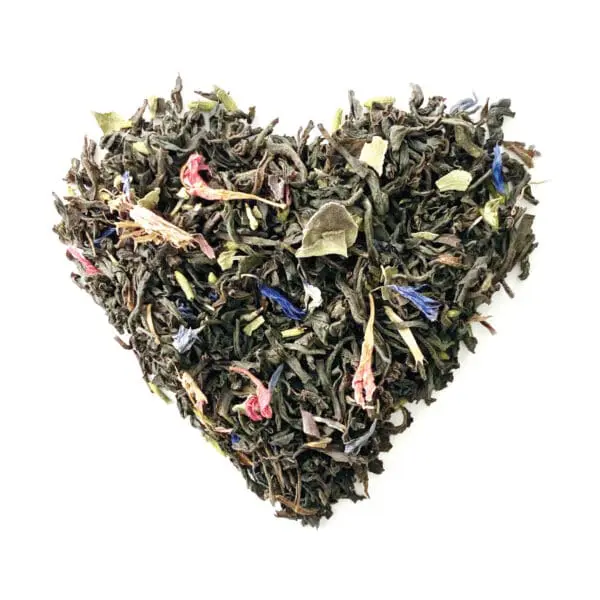
Lavender Path brings together wild Canadian bergamot, lavender, Ceylon black tea, bergamot oil, and calendula petals. Hot, it is comforting and softly aromatic. Cold-brewed, it transforms. The bergamot opens up into bright citrus notes, the lavender becomes clean and floral rather than perfumey, and the calendula adds a gentle golden hue to the water that is beautiful in a clear glass over ice.
Brew it overnight using the method above. Add a thin slice of lemon and a small pour of honey when you serve it. It is the kind of drink that makes you want to sit outside a little longer.
Lavender Path is available in 16-bag pouches or as a 40g loose leaf option. For cold brew, loose leaf gives you the most control over strength and allows you to rebrew the same leaves a second time.
Use good water. Tea is almost entirely water, so the quality matters. Filtered water makes a noticeable difference, particularly with delicate floral and herbal blends.
Do not squeeze the bag or press the leaves. When straining, let the water drain naturally. Pressing releases tannins and fine sediment that make the brew cloudy and more bitter.
Experiment with ratios. The suggested one teaspoon per cup is a starting point. Some blends, particularly lighter florals, benefit from a heavier ratio brewed for a shorter time. Trust your palate and adjust.
Keep it covered in the fridge. Tea, particularly florals, can pick up refrigerator odours if left uncovered. A sealed jar or pitcher keeps the flavour clean.
Try layering flavours. A cold-brewed herbal base can be topped with sparkling water for something that feels almost like a botanical spritzer. A squeeze of citrus, a sprig of fresh mint, or a few cucumber slices work beautifully as garnishes.
One of the real pleasures of cold brewing at home is that you are entirely in control of what goes into your glass. No colouring agents, no flavour extracts, no corn syrup. Just water, real botanicals, and however much honey or maple syrup you decide you want. That is exactly the kind of tea we have been making at Algonquin since 1996.
For families, cold brew herbal teas are a genuinely good alternative to juice and commercial iced teas for children. Naturally caffeine-free blends like Homestead or Peace Tea cold brew beautifully and are safe and enjoyable for kids. Sweeten lightly with honey and serve over ice.
For anyone watching their sugar intake, cold brew’s natural sweetness means you may not need any sweetener at all.
Summer is short in Ontario, and good reasons to be outside are worth collecting. A jar of cold brew in the fridge means you are always ten seconds away from a cold glass of something real.
How long should you cold brew tea? Most teas are ready after six to twelve hours in the fridge. Light herbal and floral blends are good at six hours. Black tea and robust herbal blends can go the full twelve. Steeping beyond twelve hours can make some teas bitter, so taste and strain when ready.
Can you cold brew tea bags instead of loose leaf? Yes. Tea bags work just as well for cold brewing. Use one bag per cup of water and steep overnight in the fridge. Loose leaf gives you more control over strength and is better for the environment, but bags are perfectly fine.
Is cold brew tea healthier than hot brew tea? Cold brew tea retains most of the antioxidants and beneficial compounds found in hot tea while extracting fewer tannins, making it gentler on digestion and naturally less bitter. It is also lower in caffeine than hot-brewed tea, which makes it a good option for those who are sensitive to caffeine.
Why did my iced tea go cloudy? Cloudiness in iced tea is caused by tannins crystallizing as the tea cools rapidly. It is harmless and does not affect flavour. Cold brewing avoids this almost entirely because it never involves heat in the first place. If you hot brew and then chill, pour into room-temperature water first before refrigerating to reduce cloudiness.
How long does cold brew tea last in the fridge? Cold brew tea keeps well for up to three days stored in a sealed jar or pitcher in the fridge. After that, the flavour begins to deteriorate. Make a fresh batch every two to three days for the best taste.