

Ritchie Sinclair: The Visionary Behind Algonquin Tea’s Sacred Artwork
When people recognise Algonquin Tea Company on a shelf, they often notice the artwork first.…

Walk through a Northern Canadian boreal forest in winter, and you might think the landscape looks barren. But look closer at those evergreen giants standing tall against the snow. Those spruce trees are holding one of nature’s most powerful medicines right there on their branches, available year-round when almost everything else has gone dormant.
Spruce needles have been keeping Indigenous peoples healthy through brutal Canadian winters for millennia. Long before vitamin C tablets existed, before we even knew what vitamins were, First Nations communities across North America understood that brewing tea from spruce needles could prevent scurvy, ease respiratory troubles, and keep their communities strong.
Today, we’re rediscovering what our ancestors always knew: this humble evergreen is a self-care powerhouse hiding in plain sight.
One of the most famous stories about spruce needle medicine comes from 1536. French explorer Jacques Cartier and his crew were dying of scurvy at Stadacona, now Quebec City. The Iroquois shared their knowledge of conifer needle tea, likely made from spruce tea or spruce beer, which contained the vitamin C the sailors desperately needed. That knowledge, passed down through generations, saved their lives.
Indigenous peoples across the boreal forest used spruce medicinally for everything. The aromatic pitch and gum were applied as poultices for wounds and infections. They chewed spruce gum as medicine and took it postpartum. Spruce bark treated colds, coughs, and flu. And they brewed the needles into tea as a tonic and decongestant.
Spruce Tips are the bright green new growth that emerges in spring. They’re tender, citrusy, and packed with vitamin C. These tips only appear for a brief window in late spring and they’re incredibly flavourful with minimal bitterness.
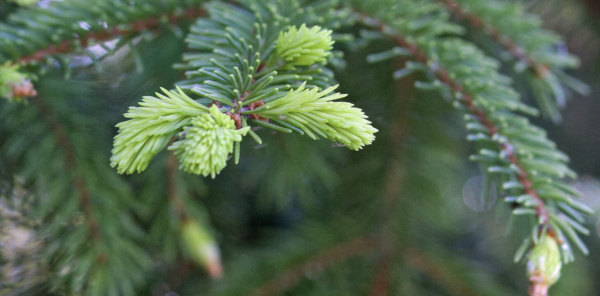
Spruce Needles are the mature, darker green needles you can harvest year-round. They’re woodsier in flavour and more bitter than tips. But here’s the beauty: needles are always available. You can harvest spruce needles any time of year.
Both are medicinal. Tips are just more delicate and seasonal, while needles are your reliable year-round wellness ally.
For spruce tips, catch them in spring when they’re 1-2 centimetres long, right after the papery brown casings have opened to reveal brilliant lime-green growth. They’re most tender and flavourful during this brief window.
For spruce needles, harvest any time of year. Winter needles are stronger and more bitter but still loaded with beneficial compounds.
When harvesting: take only what you need, never strip a branch bare, avoid trees near roads, and always thank the tree for its medicine.
Let’s talk about why spruce needles are such a big deal for your health.
Vitamin C Powerhouse: Spruce needles contain about five times more vitamin C than lemons. That’s wild, right? One cup of spruce needle tea delivers serious immune support, especially crucial during cold and flu season.
Respiratory Support: Indigenous communities used spruce for pneumonia, whooping cough, croup, and bronchial infections. The antiseptic properties help clear congestion and soothe sore throats. When you’re dealing with a stubborn cough or chest cold, spruce tea is your friend.
Antioxidant Rich: Spruce contains flavonoids, carotenoids, and other plant compounds that protect your cells from oxidative stress. These antioxidants support everything from heart health to skin vitality to slowing the ageing process.
Mineral Dense: You’re also getting potassium, magnesium, and other minerals that support muscle function, nerve transmission, and overall well-being.
The taste? Piney, fresh, like walking through the woods. Some people describe it as tasting exactly like they would imagine a Christmas tree’s smell. It’s earthy, pleasant, slightly citrusy, and grounding.
Making spruce needle tea is beautifully simple, though there’s one important trick: don’t boil the needles directly in water. Boiling destroys much of the vitamin C. Instead, pour hot water over the needles and let them steep. To keep it hot, use an insulated mug or thermos.
Basic Method:
The tea will be relatively clear, which is normal. Spruce needles don’t have much pigment. If you let it sit, it will gradually turn amber as it oxidises.
For a sweeter version, add honey or maple syrup. For an extra zest, add a few drops of lemon or lime. The citrus complements the piney flavour beautifully.
At Algonquin Tea, we’ve captured that forest magic in Blue Moon, an enchanting blend that combines wild spruce tips with artisanal Earl Grey black tea.

The spruce tips bring bright citrus overtones and restore energy, whilst the Ceylon black tea provides a smooth, robust base enhanced by bergamot oil and blue cornflower. The result is as sublime and magical as a blue moon on a starlit night. The spruce honours traditional Indigenous medicine whilst creating something beautifully refined and utterly delicious. It’s the perfect cup when you want both grounding earthiness and an energising lift.
Pregnant women should avoid spruce tea. It can induce early labour or miscarriage.
Don’t eat the needles raw, they can cause stomach cramps. Always brew them into tea first.
Make sure you’re harvesting spruce and not yew or cypress, which can be toxic. Spruce needles are four-sided and roll easily between your fingers. They grow individually on branches, unlike pine needles which grow in clusters.
Harvest only from areas that haven’t been sprayed with chemicals.
When we drink spruce needle tea, we’re participating in a healing tradition that stretches back thousands of years. We’re tapping into the wisdom that kept entire communities healthy through harsh winters, that saved French explorers from scurvy, that continues to support wellness in the boreal forest today.
Every sip connects us to the land, to the trees, to the Indigenous knowledge keepers who understood plant medicine long before modern science. It’s medicine that’s freely given, abundantly available, and remarkably effective.
Next time you’re near a spruce tree, appreciate what it offers. Those needles are powerful medicine, time-tested and forest-approved.